

Introduction
In the hospitality industry, smooth service and customer satisfaction depend heavily on coordination between staff and management. One of the most important roles in this system is the Restaurant Captain. This position acts as a bridge between the kitchen team, waitstaff, and guests, ensuring that service runs efficiently and customers enjoy a positive dining experience.
A restaurant captain is not just a senior waiter; the role requires leadership, communication skills, and the ability to manage a fast-paced environment. Whether it is a fine dining setup or a casual dining outlet, the captain plays a key role in maintaining service standards and ensuring operational excellence in a Restaurant environment.
This article provides a complete overview of the restaurant captain job description, including responsibilities, required skills, qualifications, salary expectations, and career growth opportunities.
What is a Restaurant Captain?
A restaurant captain is a supervisory staff member responsible for overseeing the front-of-house operations. They ensure that guests receive prompt service, orders are accurately taken, and the overall dining experience meets quality standards.
In simple terms, the restaurant captain manages the service team and ensures that customers are satisfied from the moment they enter the restaurant until they leave. They act as a team leader for waiters and assist in resolving any service-related issues.
The role requires strong leadership, attention to detail, and excellent communication skills. In many cases, the captain also handles guest complaints and coordinates with the kitchen staff to ensure smooth service flow.
Key Responsibilities of a Restaurant Captain
The responsibilities of a restaurant captain go beyond serving food. They play a critical role in managing daily operations. Below are the core duties:
1. Supervising Service Staff
The captain oversees waiters and junior staff, ensuring that they follow proper service standards. They assign tasks, monitor performance, and guide the team during busy hours.
2. Greeting and Seating Guests
One of the first impressions a guest receives is from the front-of-house team. The captain often greets guests, assists with seating arrangements, and ensures they feel welcomed.
3. Taking and Managing Orders
In many restaurants, captains personally take orders from guests. They ensure accuracy and communicate the orders clearly to the kitchen staff to avoid mistakes.
4. Coordinating with Kitchen Staff
Smooth coordination between the kitchen and service team is essential. The captain ensures that food is prepared correctly and delivered on time.
5. Handling Customer Complaints
Customer satisfaction is a top priority. If any issue arises, the captain is responsible for resolving it professionally and ensuring the guest leaves satisfied.
6. Maintaining Service Standards
The captain ensures that all staff follow hygiene rules, grooming standards, and proper service etiquette.
7. Managing Billing and Payments
In some establishments, the captain may assist in billing processes or verify orders before generating the final bill.
8. Training New Staff
New employees often learn from experienced captains. Training includes service techniques, menu knowledge, and customer interaction skills.
Skills Required for a Restaurant Captain
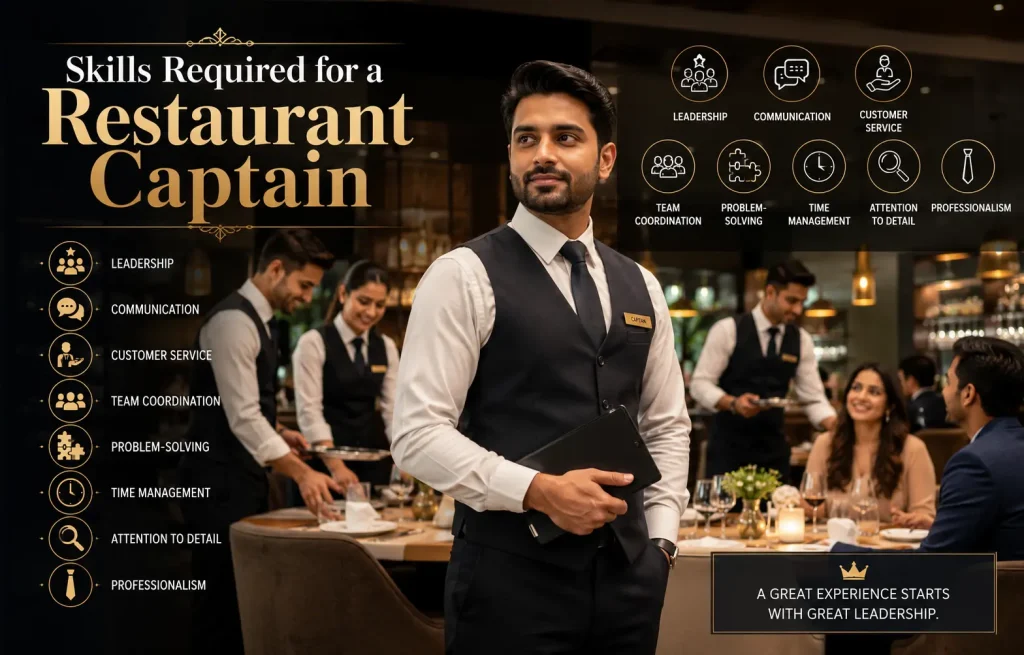
To succeed in this role, certain skills are essential. A restaurant captain must combine technical knowledge with interpersonal abilities.
Communication Skills
Clear and polite communication is key when dealing with guests and staff. The captain must be able to explain instructions and handle customer queries effectively.
Leadership Skills
As a team leader, the captain must guide and motivate the service staff. Good leadership ensures better teamwork and efficiency.
Customer Service Skills
Understanding guest needs and providing a positive experience is the heart of this role.
Problem-Solving Ability
Unexpected situations like order delays or complaints require quick thinking and effective solutions.
Time Management
Restaurants are fast-paced environments. The captain must manage multiple tasks at once without compromising quality.
Product Knowledge
A strong understanding of the menu, ingredients, and preparation methods helps in assisting guests and making recommendations.
Physical Stamina
The job often requires standing for long hours and working during peak dining times.
Daily Duties of a Restaurant Captain
A typical day for a restaurant captain is dynamic and busy. Here is what a usual workday may look like:
At the start of the shift, the captain checks staff attendance and assigns responsibilities. They review reservations and prepare the dining area for service. Tables are arranged, cleanliness is ensured, and staff are briefed on special instructions.
During service hours, the captain monitors customer flow, takes orders, coordinates with the kitchen, and ensures timely delivery of food. They also handle guest interactions, resolve complaints, and maintain order in the dining area.
After peak hours, the captain reviews service performance, checks billing accuracy, and ensures that the restaurant is clean and ready for the next shift.
Educational Qualifications and Experience
While formal education requirements may vary, most employers prefer candidates with at least a high school diploma or equivalent. However, a diploma or degree in hotel management or hospitality can significantly improve job prospects.
Previous experience in the hospitality industry is often required. Many restaurant captains start their careers as waiters or stewards and get promoted based on performance and experience.
On-the-job training is common, especially in large restaurant chains or hotels.
Work Environment
Restaurant captains work in fast-paced and customer-focused environments. The job may involve working evenings, weekends, and holidays since these are peak business hours.
The environment is usually lively and sometimes stressful, especially during rush hours. However, it can also be rewarding due to customer interaction and teamwork.
Career Growth Opportunities
The position of restaurant captain can be a stepping stone to higher roles in the hospitality industry. With experience, one can progress to:
- Restaurant Supervisor
- Assistant Manager
- Restaurant Manager
- Food and Beverage Manager
- Operations Manager in hotel chains
Those who continue to build skills and gain experience can even move into international hospitality roles or open their own food business.
Salary Expectations
The salary of a restaurant captain varies depending on location, experience, and type of establishment.
In general, entry-level captains earn moderate salaries, while experienced professionals in fine dining or luxury hotels earn significantly higher pay. Additional benefits may include tips, service charges, meals, and accommodation in some cases.
With experience and performance-based promotions, income can increase steadily over time.
Challenges in the Role
Like any job, being a restaurant captain comes with challenges:
- Handling difficult customers
- Managing pressure during peak hours
- Coordinating between kitchen and service staff
- Maintaining consistency in service quality
- Working long and irregular hours
Despite these challenges, many professionals find the role fulfilling due to its dynamic nature and growth opportunities.
Tips to Succeed as a Restaurant Captain
If you are planning to build a career in this role, here are some useful tips:
- Focus on improving communication skills
- Learn the menu thoroughly
- Stay calm under pressure
- Be supportive to your team
- Pay attention to customer feedback
- Always maintain professional behavior
- Keep improving your hospitality knowledge
Success in this role depends on consistency, patience, and dedication to customer satisfaction.
Conclusion
The restaurant captain job is a vital part of the hospitality industry. It combines leadership, customer service, and operational management into one dynamic role. From handling guests to coordinating staff and ensuring smooth service, the captain plays a central role in delivering a memorable dining experience.
For those passionate about hospitality, this career offers excellent growth opportunities and valuable industry experience. Whether you start as a waiter or directly enter the field through training, the path to becoming a restaurant captain can open doors to long-term success in the food and service industry.