

Management in 2025 is evolving faster than ever before. Organizations are no longer relying only on traditional leadership structures or fixed workflows. Instead, they are adapting to rapid technological changes, shifting workforce expectations, and global uncertainty. Modern management is becoming more flexible, data-driven, and human-centered at the same time.
This article explores the most important trends shaping management in 2025 and how they are influencing the way organizations operate, lead teams, and achieve goals.
Human-Centered Leadership is Becoming the Standard
One of the biggest shifts in management today is the focus on people rather than just processes or profits. Leaders are now expected to understand employee well-being, motivation, and personal development.
Instead of strict top-down control, managers are adopting empathy-driven leadership styles. This means listening more, supporting mental health, and building trust within teams.
Companies are realizing that productivity improves when employees feel valued and supported. As a result, leadership training programs now include emotional intelligence, communication skills, and conflict resolution as core elements.
Hybrid and Flexible Work Models Are Here to Stay
The traditional 9-to-5 office structure is no longer the default. In 2025, hybrid work has become a long-term strategy rather than a temporary solution.
Employees expect flexibility in where and how they work. Many organizations now allow teams to split time between home and office, while some operate fully remote.
This shift has changed management responsibilities significantly. Leaders must now focus on outcomes rather than hours worked. Trust and accountability have become more important than physical presence.
To manage hybrid teams effectively, companies are investing in collaboration tools, virtual communication platforms, and digital performance tracking systems.
AI and Automation in Decision-Making
Artificial intelligence is playing a major role in modern management. From data analysis to predictive insights, AI is helping leaders make faster and more accurate decisions.
Managers now rely on dashboards powered by machine learning to track performance, forecast trends, and identify risks early.
Automation is also reducing repetitive tasks such as scheduling, reporting, and basic customer support. This allows managers and employees to focus on more strategic work.
However, the challenge lies in balancing automation with human judgment. While AI provides data, final decisions still require human understanding, ethics, and context.
Skills-Based Hiring Over Traditional Degrees
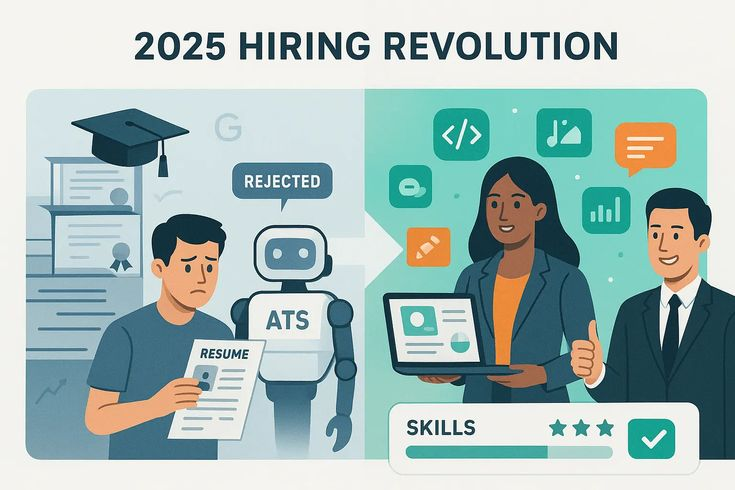
In 2025, companies are shifting away from traditional degree-based hiring. Instead, they are focusing more on skills, experience, and practical ability.
This trend is especially strong in technology, marketing, and creative industries. Employers are now more interested in what a candidate can do rather than where they studied.
As a result, online certifications, bootcamps, and project-based learning are becoming more valuable. Managers are also prioritizing continuous learning within their teams to keep up with changing industry demands.
Data-Driven Management Decisions
Data is now at the center of modern business management. Organizations collect massive amounts of information from customers, employees, and operations.
In 2025, successful managers are those who can interpret this data and turn it into actionable strategies.
Instead of relying on intuition alone, decisions are increasingly backed by analytics. This includes customer behavior analysis, market trends, employee performance metrics, and financial forecasting.
However, data literacy has become an essential skill for managers. Understanding how to read and apply data is now as important as traditional leadership abilities.
Employee Experience as a Business Priority
Employee experience is no longer just an HR concern; it is a core management strategy. Companies now design work environments that improve satisfaction, engagement, and retention.
This includes flexible policies, better workplace culture, mental health support, and personalized career development plans.
Managers are focusing on creating a positive daily experience for employees, not just annual reviews or salary increases.
Organizations that invest in employee experience are seeing lower turnover rates and higher productivity levels.
Sustainability and Ethical Management
Sustainability is becoming a key responsibility for modern managers. Businesses are expected to operate in ways that are environmentally responsible and socially ethical.
This includes reducing carbon footprints, using sustainable resources, and ensuring fair labor practices.
In 2025, management strategies often include sustainability goals alongside financial targets. Leaders are being evaluated not only on profits but also on their environmental and social impact.
Ethical decision-making is also gaining importance, especially in areas like data privacy, AI usage, and corporate transparency.
Rise of Agile and Adaptive Management Styles
Traditional long-term planning is becoming less effective in a fast-changing world. Instead, agile management is taking over.
Agile management focuses on flexibility, quick decision-making, and continuous improvement. Teams work in short cycles, review results frequently, and adjust strategies as needed.
This approach allows organizations to respond quickly to market changes, customer feedback, and unexpected challenges.
Managers are becoming facilitators rather than controllers, guiding teams instead of micromanaging them.
Global and Cross-Cultural Teams
With remote work becoming normal, teams are now more global than ever. Companies often have employees working from different countries, time zones, and cultural backgrounds.
This diversity brings both opportunities and challenges. On one hand, it increases creativity and innovation. On the other hand, it requires stronger communication and cultural awareness.
Managers must now understand cross-cultural communication, global coordination, and inclusive leadership practices.
Continuous Learning and Upskilling
The pace of change in industries means that skills quickly become outdated. In response, continuous learning has become a core part of modern management.
Organizations are encouraging employees to regularly upgrade their skills through training programs, workshops, and online courses.
Managers are also expected to be learners themselves, staying updated with new tools, technologies, and leadership methods.
Companies that promote learning cultures are more adaptable and competitive in the long run.
Cybersecurity Awareness in Management
As businesses become more digital, cybersecurity has become a management priority. Leaders are now responsible for ensuring that company data, customer information, and internal systems are protected.
Cyber threats are increasing in complexity, making awareness and prevention strategies essential.
Managers must work closely with IT teams to implement security policies, train employees, and respond quickly to potential risks.
The Changing Role of Managers
Perhaps the biggest trend in 2025 is the transformation of the manager’s role itself. Managers are no longer just supervisors; they are coaches, facilitators, and strategists.
Their responsibilities now include:
- Supporting employee growth
- Encouraging collaboration
- Interpreting data for decision-making
- Managing remote and hybrid teams
- Driving innovation and adaptability
This shift requires a more balanced skill set that combines technical understanding, emotional intelligence, and strategic thinking.
Conclusion
Management in 2025 is defined by flexibility, technology, and people-focused leadership. Organizations are moving away from rigid systems and adopting more adaptive, inclusive, and data-driven approaches.
Successful managers today are those who can balance human needs with technological advancements, while also staying agile in an unpredictable environment.
The future of management is not about controlling every detail but about guiding teams, empowering employees, and making smarter decisions in a constantly changing world.