
Introduction
Education is changing faster than ever before. Traditional classrooms, where students sit quietly and listen to lectures, are no longer enough to prepare learners for a rapidly evolving world. Today, creativity, collaboration, critical thinking, and adaptability are just as important as academic knowledge.
Educational institutions can introduce students to creative technologies like an AI logo generator as part of modern digital literacy and entrepreneurship programs.
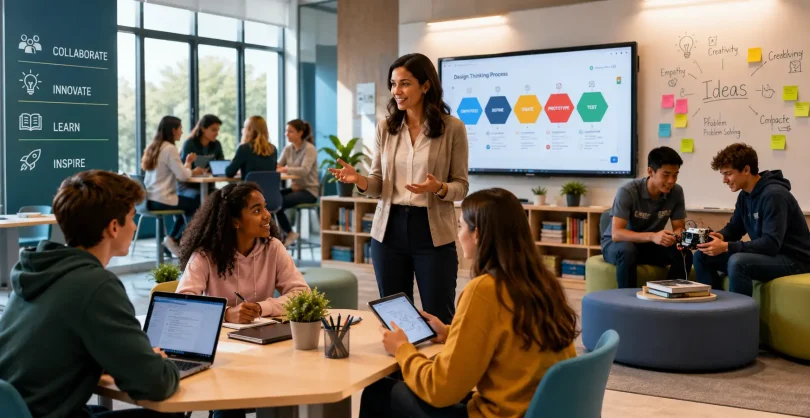
An innovative learning environment is not just about technology or modern classrooms. It is about creating a space—physical, digital, and emotional—where students feel motivated to explore ideas, solve problems, and learn actively rather than passively. In such an environment, learners are not just receivers of information; they become creators, thinkers, and problem-solvers.
Building this kind of environment requires a thoughtful approach that combines teaching methods, classroom design, technology, and mindset. Let’s explore how this can be done effectively.
Understanding What an Innovative Learning Environment Means
An innovative learning environment is a setting where students are encouraged to think beyond memorization and focus on understanding, experimentation, and creativity. It supports flexible learning styles and promotes engagement through real-world connections.
Instead of one-way teaching, it focuses on interaction. Instead of rigid rules, it encourages exploration. And instead of uniform learning, it embraces diversity in how students learn and express themselves.
At its core, innovation in education is about making learning meaningful, engaging, and adaptable to individual needs.
Creating a Student-Centered Approach
The foundation of an innovative learning environment is shifting the focus from teacher-led instruction to student-centered learning. This means students take an active role in their education.
Teachers act more like guides or mentors rather than sole sources of knowledge. Students are encouraged to ask questions, investigate topics, and participate in discussions.
This approach builds independence and confidence. When students feel their voice matters, they become more engaged and motivated to learn.
Some practical ways to implement this include:
- Allowing students to choose project topics
- Encouraging group discussions and peer learning
- Using problem-based learning activities
- Giving students responsibility for parts of the lesson
Designing Flexible Learning Spaces
The physical environment plays a major role in shaping how students learn. Traditional rows of desks facing a board limit interaction and creativity. An innovative learning space is flexible and adaptable.
Classrooms should support different types of activities—group work, independent study, presentations, and creative projects.
Key features of a flexible learning space include:
- Movable furniture that can be rearranged easily
- Comfortable seating areas for collaboration
- Quiet zones for focused individual work
- Open spaces for group discussions or presentations
Even small changes, like rearranging desks into circles or creating learning corners, can significantly improve interaction and engagement.
Integrating Technology in Meaningful Ways
Technology is a powerful tool in modern education, but it must be used purposefully. Simply using devices in the classroom does not guarantee innovation. The goal is to enhance learning, not replace traditional teaching completely.
Digital tools can help students explore concepts more deeply, collaborate remotely, and access a wide range of resources.
Some effective uses of technology include:
- Interactive learning platforms and educational apps
- Virtual labs and simulations for science subjects
- Online collaboration tools for group projects
- Video lessons and digital storytelling
- Research tools for independent learning
When used correctly, technology makes learning more interactive and accessible.
Encouraging Creativity and Critical Thinking
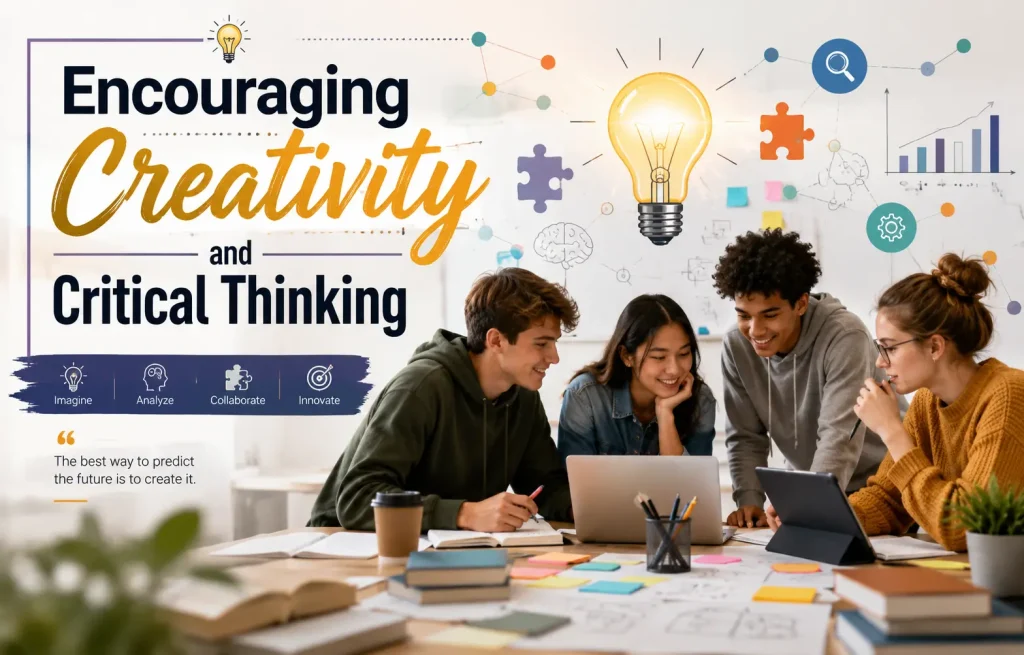
An innovative learning environment must go beyond memorization. Students should be encouraged to think critically, analyze information, and come up with original ideas.
Teachers can promote this by asking open-ended questions instead of questions with one correct answer. Assignments should challenge students to solve real-world problems rather than simply repeat information.
Creative activities such as debates, brainstorming sessions, and design projects help students develop deeper thinking skills.
When learners are encouraged to think differently, they become more confident in expressing their ideas.
Promoting Collaboration and Communication
Collaboration is an essential skill in today’s world. Students must learn how to work with others, share ideas, and resolve conflicts.
An innovative classroom encourages group work and teamwork-based learning activities. Students learn from each other, not just from the teacher.
Some effective strategies include:
- Group projects with shared responsibilities
- Peer teaching sessions
- Classroom discussions and debates
- Team-based problem-solving activities
This not only improves communication skills but also helps students understand different perspectives.
Making Learning Relevant to Real Life
Students often ask, “Why do we need to learn this?” An innovative learning environment answers this question by connecting lessons to real-world situations.
When students see how knowledge applies to everyday life, they become more interested and engaged.
For example:
- Math can be taught using budgeting or shopping scenarios
- Science can be linked to environmental issues
- Language skills can be developed through storytelling and presentations
- Social studies can be connected to current events
Real-world learning helps students understand the purpose behind their education.
Encouraging Continuous Feedback and Assessment
Traditional exams are not always the best way to measure learning. An innovative environment uses continuous feedback to help students improve over time.
Instead of focusing only on final results, teachers should assess progress through various methods such as:
- Projects and presentations
- Group work evaluation
- Self-assessment and reflection
- Regular feedback sessions
This approach reduces stress and helps students focus on growth rather than grades alone.
Feedback should be constructive, specific, and supportive. It should guide students on how they can improve.
Supporting Inclusive Learning
Every student learns differently. Some may grasp concepts quickly, while others need more time or different methods. An innovative learning environment respects these differences.
Inclusivity means ensuring that every student has equal opportunities to learn and succeed, regardless of their background or abilities.
Teachers can support inclusivity by:
- Using multiple teaching methods (visual, audio, hands-on)
- Providing extra support for struggling students
- Encouraging peer support systems
- Creating a safe and respectful classroom culture
When all students feel valued, learning becomes more effective.
The Role of Teachers in Innovation
Teachers play a crucial role in shaping innovative learning environments. Their mindset, creativity, and flexibility directly impact student success.
In an innovative classroom, teachers are not just instructors—they are facilitators, mentors, and motivators. They guide students through learning experiences rather than simply delivering information.
Teachers should also continuously improve their skills by:
- Learning new teaching methods
- Exploring educational technology
- Attending workshops and training sessions
- Collaborating with other educators
A motivated teacher creates a motivated classroom.
Overcoming Challenges
Creating an innovative learning environment is not without challenges. Limited resources, resistance to change, and large class sizes can make implementation difficult.
However, these challenges can be managed with gradual improvements. Even small steps, like changing teaching methods or introducing group activities, can make a difference.
Schools and educators should focus on progress rather than perfection. Innovation is a continuous process, not a one-time change.
Practical Steps to Build an Innovative Learning Environment
To bring everything together, here are some practical steps that can be taken:
- Start by shifting focus to student-centered learning
- Redesign classroom layout for flexibility
- Integrate technology purposefully
- Encourage collaboration and teamwork
- Connect lessons with real-life examples
- Use continuous feedback instead of only exams
- Support different learning styles
- Promote creativity and critical thinking
By applying these steps gradually, any learning space can become more innovative and effective.
Conclusion
Creating an innovative learning environment is about more than modern tools or stylish classrooms. It is about changing how learning happens. It requires a shift in mindset—from teaching to guiding, from memorization to understanding, and from passive learning to active participation.
When students are given freedom to explore, collaborate, and think creatively, they develop skills that prepare them for real-life challenges. At the same time, teachers become facilitators of meaningful learning experiences.
Innovation in education is not a destination—it is a continuous journey. With the right approach, any classroom can become a space where curiosity grows, ideas flourish, and learning becomes truly meaningful.