
Introduction
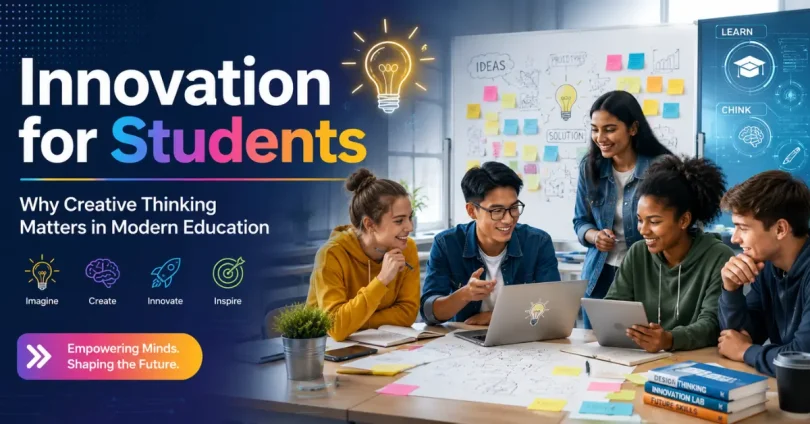
Innovation has become one of the most important skills in today’s world. Students are no longer expected to only memorize information and pass exams. Modern education encourages learners to think creatively, solve real-life problems, and develop new ideas that can improve society. Innovation helps students become confident, independent, and prepared for future challenges.
In simple words, innovation means creating something new or improving existing ideas in a better way. For students, innovation can appear in many forms. It may involve using technology for learning, creating unique school projects, solving community issues, designing apps, starting online businesses, or finding smarter ways to study.
The world is changing rapidly because of technology, artificial intelligence, and digital communication. Because of this, students who develop innovative thinking will have better opportunities in education and careers. Innovation does not only help students succeed academically but also improves their creativity, leadership skills, communication, and problem-solving abilities.
This article explains the importance of innovation for students, how it benefits education, practical ways students can become more innovative, challenges they may face, and how innovation shapes the future of learning and careers.
What Is Innovation for Students?
Innovation for students means using creativity and new ideas to improve learning, solve problems, or create something valuable. It is not limited to science or technology. Innovation can happen in education, business, art, social work, and everyday life.
For example, a student who develops a better study method is being innovative. A student who creates educational videos for classmates is also practicing innovation. Similarly, students who organize environmental campaigns, design school apps, or create online content are using innovative thinking.
Innovation encourages students to think differently instead of following traditional methods all the time. It allows them to ask questions, explore possibilities, and test their ideas.
The goal of innovation is not perfection. Instead, it focuses on improvement, creativity, and learning through experimentation.
Why Innovation Is Important for Students
Encourages Creative Thinking
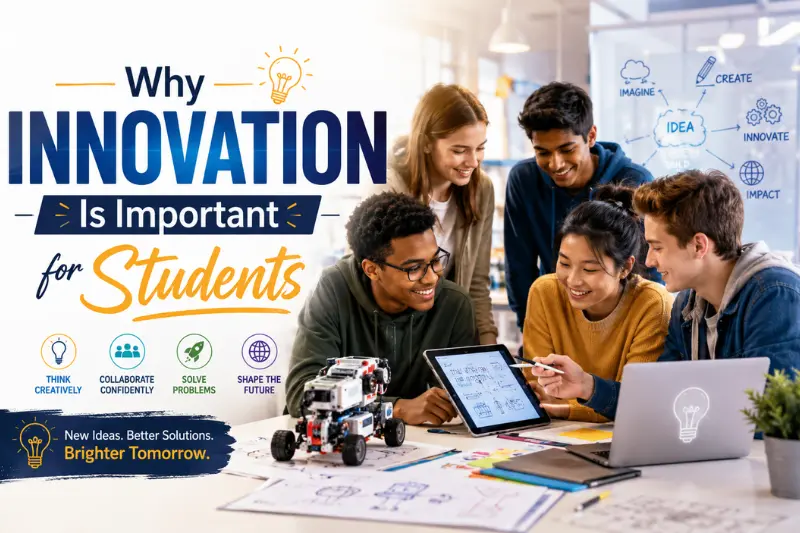
One of the biggest benefits of innovation is that it develops creativity. Students learn how to think beyond textbooks and standard classroom methods. Instead of simply memorizing lessons, they begin to explore different ways of understanding and applying knowledge.
Creative thinking allows students to generate original ideas and discover unique solutions to problems. This skill becomes extremely useful not only in education but also in future careers and personal life.
Improves Problem-Solving Skills
Innovative students become better problem solvers. They learn how to analyze situations carefully, identify challenges, and create practical solutions.
For example, students working on science experiments may face failures before achieving successful results. This teaches them patience, critical thinking, and resilience. They learn that mistakes are part of the learning process.
Problem-solving skills are valuable in every profession because real-life situations often require smart and creative solutions.
Builds Confidence
Innovation helps students believe in their abilities. When students successfully complete a creative project or solve a difficult problem, they gain confidence and motivation.
Confidence encourages students to participate in discussions, present ideas, and take leadership roles in schools and communities. Even small achievements can inspire students to explore bigger opportunities in the future.
Makes Learning More Interesting
Traditional education can sometimes become repetitive and boring. Innovation introduces excitement into learning by encouraging hands-on activities, teamwork, and creativity.
Interactive learning methods such as projects, digital tools, presentations, and practical experiments make education more engaging. Students become more active participants in the learning process instead of passive listeners.
Prepares Students for Future Careers
Employers today value creativity, adaptability, and innovation more than ever before. Modern industries need people who can think critically, solve complex problems, and adapt to changing technology.
Students who develop innovative skills early are better prepared for careers in technology, business, healthcare, engineering, education, media, and many other fields.
Innovation also helps students become entrepreneurs who can create their own opportunities instead of depending entirely on traditional jobs.
The Role of Technology in Student Innovation
Technology has completely transformed education and innovation. Today’s students have access to information and tools that previous generations could not imagine.
Online Learning Platforms
Educational websites and online courses allow students to learn new skills from anywhere in the world. Students can study coding, graphic design, video editing, business management, digital marketing, and many other subjects outside school curriculums.
This access to knowledge encourages independent learning and creativity.
Artificial Intelligence Tools
Artificial intelligence is helping students improve productivity and learning experiences. AI tools can assist with writing, brainstorming ideas, research, language learning, and time management.
Students can use AI responsibly to increase efficiency and focus more on creativity and innovation.
Social Media and Digital Content
Social media platforms have become powerful tools for creativity. Many students create educational videos, tutorials, blogs, podcasts, and digital art to share knowledge and express ideas.
Some students even build successful online careers while continuing their education.
Collaboration Through Technology
Technology allows students from different countries and cultures to work together on projects. Collaboration improves communication skills and introduces students to diverse perspectives and ideas.
Practical Ways Students Can Become More Innovative
Stay Curious
Curiosity is the foundation of innovation. Students should ask questions, explore new topics, and never stop learning.
Reading books, watching educational videos, attending workshops, and participating in discussions can help students expand their thinking.
Curious students are more likely to discover creative solutions and innovative ideas.
Learn Multiple Skills
Innovation often happens when different skills are combined. Students should try learning a variety of abilities such as:
- Coding
- Public speaking
- Writing
- Graphic design
- Photography
- Video editing
- Robotics
- Business management
- Communication skills
Learning multiple skills increases creativity and opens new opportunities.
Participate in Competitions
Competitions encourage students to think creatively and perform under pressure. Science fairs, debate competitions, coding contests, and business challenges help students improve problem-solving and teamwork abilities.
Competitions also provide valuable experience and exposure.
Start Personal Projects
Students do not need large budgets or expensive tools to become innovative. Small projects can teach important lessons and improve creativity.
Some examples include:
- Starting a blog
- Creating a YouTube channel
- Building a mobile app
- Launching a small online business
- Organizing community events
- Designing handmade products
These activities teach leadership, planning, and practical problem-solving.
Accept Failure as Part of Learning
Innovation always involves experimentation. Not every idea will succeed immediately, and that is completely normal.
Students should understand that failure is not the end. Every mistake provides valuable lessons that can improve future performance.
Many successful inventors, entrepreneurs, and leaders experienced failures before achieving success.
How Schools Can Encourage Innovation
Schools and educational institutions play a major role in developing innovative students.
Encourage Open Discussions
Students should feel comfortable sharing opinions and asking questions without fear of criticism. Open discussions improve creativity and confidence.
Use Project-Based Learning
Project-based learning allows students to apply theoretical knowledge in real-life situations. It encourages teamwork, research, and practical problem-solving.
Provide Access to Technology
Schools should provide digital tools, internet access, and creative software that support learning and innovation.
Support Creative Ideas
Teachers should motivate students to explore ideas, even if they seem unusual at first. Positive encouragement can inspire students to continue improving.
Promote Teamwork
Collaboration teaches students how to communicate, share responsibilities, and combine ideas to achieve better results.
Innovation in Different Fields
Innovation is valuable in every area of life and education.
Innovation in Science
Students can create experiments, environmental solutions, and technological inventions that solve real-world problems.
Innovation in Business
Many young students are starting online stores, digital services, and freelance careers while studying.
Innovation in Arts
Creative students use music, animation, photography, writing, and digital design to express ideas and inspire audiences.
Innovation in Social Change
Students can raise awareness about important issues such as education, climate change, mental health, and equality.
Innovation in Education
Students themselves can create study guides, educational apps, and online tutorials that help other learners.
Challenges Students Face in Innovation
Although innovation provides many benefits, students often face several challenges.
Fear of Failure
Many students hesitate to try new ideas because they fear criticism or mistakes. This fear can reduce creativity and confidence.
Academic Pressure
Heavy school workloads and exam stress can limit the time students spend on creative activities and projects.
Lack of Resources
Not every student has access to computers, internet connections, mentorship, or financial support.
Limited Encouragement
Some students may not receive support from teachers, schools, or family members for innovative ideas.
Distractions
Social media and entertainment can sometimes reduce focus and productivity if not managed properly.
How Students Can Overcome These Challenges
Develop a Growth Mindset
Students should believe that skills and intelligence can improve with effort and practice.
Use Free Online Resources
The internet offers free tutorials, courses, educational videos, and tools that support learning and innovation.
Find Mentors
Teachers, professionals, and experienced individuals can guide students and provide valuable advice.
Practice Time Management
Balancing studies and creative activities helps students remain productive without feeling overwhelmed.
Work with Others
Teamwork allows students to exchange ideas, solve problems together, and stay motivated.
Real-Life Examples of Student Innovation
Students around the world are already making impressive contributions through innovation.
- Some students create mobile apps that help local communities.
- Others design environmentally friendly projects to reduce pollution.
- Many young entrepreneurs build successful online businesses while studying.
- Students also create educational content on YouTube and social media that helps millions of learners globally.
These examples prove that innovation is not limited by age. Young people can create meaningful change when they are encouraged to think creatively.
Benefits of Innovation Beyond Academics
Innovation provides long-term benefits that extend far beyond school performance.
Better Communication Skills
Presenting projects and discussing ideas improve speaking and writing abilities.
Leadership Development
Innovative students often become leaders who inspire and guide others.
Increased Adaptability
Innovation teaches students how to adapt to changing situations and technologies.
Financial Opportunities
Creative ideas can become businesses, freelance careers, or scholarship opportunities.
Stronger Decision-Making Skills
Students learn how to analyze situations carefully and make informed choices.
Future of Innovation for Students
The future of student innovation is extremely exciting because technology continues to evolve rapidly.
Artificial Intelligence in Education
AI tools will personalize learning experiences and improve productivity for students.
Virtual Reality Learning
Virtual reality and augmented reality will create interactive educational experiences that make learning more engaging.
Green Innovation
Students will increasingly focus on sustainability, renewable energy, and environmental protection.
Digital Entrepreneurship
More students will build online businesses, digital brands, and remote careers from an early age.
Global Collaboration
Technology will allow students from different countries to work together and share ideas more easily.
Tips for Parents and Teachers
Parents and teachers can strongly influence a student’s innovative mindset.
Encourage Questions
Allow students to ask questions freely and explore new topics.
Appreciate Creativity
Focus on effort and creativity instead of only grades and exam results.
Provide Opportunities
Introduce students to workshops, competitions, and practical activities.
Avoid Constant Criticism
Constructive feedback is important, but excessive negativity can reduce confidence and motivation.
Support Independent Thinking
Give students opportunities to solve problems and make decisions on their own.
Conclusion
Innovation for students is more than just creating new technology or inventions. It is about developing creativity, confidence, curiosity, and problem-solving skills that prepare young people for the future.
In today’s fast-changing world, innovative thinking has become one of the most valuable abilities students can possess. Students who embrace innovation become better learners, stronger leaders, and more adaptable individuals.
Innovation allows students to turn ideas into action, solve real-world problems, and create positive change in society. With the support of schools, teachers, parents, and technology, students can unlock their full potential and achieve success in education and life.
The future belongs to students who are willing to imagine new possibilities, explore creative ideas, and continue learning without fear of failure.