
Introduction
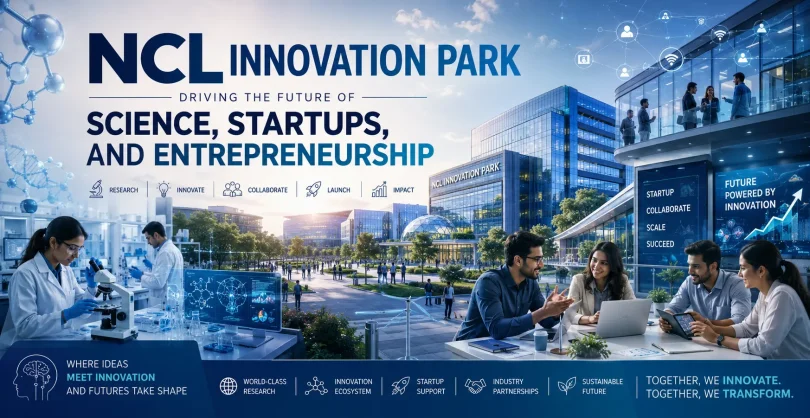
In today’s fast-changing world, innovation is the backbone of economic growth and technological progress. Across countries, institutions are building ecosystems that support startups, researchers, and entrepreneurs in turning ideas into real-world solutions. One such important initiative is the NCL Innovation Park, a platform designed to bridge the gap between scientific research and market-ready innovations.
It plays a key role in nurturing early-stage startups, supporting deep-tech ideas, and creating a collaborative environment where scientists, engineers, and entrepreneurs can work together. By offering infrastructure, mentorship, and industry connections, it helps transform concepts into impactful businesses.
The growing importance of innovation-driven economies has made such parks essential for national development, and this initiative stands out as a strong example of how research institutions can contribute beyond academia.
What is NCL Innovation Park
NCL Innovation Park is an innovation and incubation ecosystem associated with scientific research and development institutions. It is designed to support startups and entrepreneurs working on science-based, technology-driven, and engineering-focused solutions.
Unlike traditional business hubs, it focuses more on deep-tech innovation, where scientific knowledge is converted into practical applications. This includes areas such as chemistry, biotechnology, materials science, clean energy, environmental solutions, and advanced engineering.
The core idea behind the park is to create a supportive bridge between laboratory research and real-world industries. Many innovations developed in research labs often struggle to reach the market. This innovation park helps solve that gap by providing the right environment, resources, and guidance.
Vision and Mission
The vision of NCL Innovation Park is to foster a culture of innovation where scientific research leads to meaningful societal and industrial impact. It aims to promote entrepreneurship rooted in strong technical knowledge and research excellence.
Its mission includes:
- Encouraging researchers and students to develop entrepreneurial thinking
- Supporting startups in transforming scientific ideas into viable products
- Promoting collaboration between industry and academia
- Strengthening India’s deep-tech innovation ecosystem
- Providing mentorship, funding access, and technical support to early-stage ventures
This vision ensures that innovation is not limited to research papers but is actively converted into real-world solutions that can improve lives and industries.
Infrastructure and Facilities
A key strength of NCL Innovation Park is its well-designed infrastructure that supports innovation at multiple levels. Startups working here get access to modern facilities that reduce the cost and complexity of early development.
Some of the key facilities include:
Research and development labs
These labs are equipped with advanced instruments and tools that help startups conduct experiments, test prototypes, and refine their technologies.
Co-working spaces
Entrepreneurs and teams are provided shared office spaces that encourage collaboration and idea exchange. This environment helps build networking and teamwork among innovators.
Prototype development support
The park offers support for building and testing early-stage prototypes, which is essential for product development in science and engineering fields.
Technical and scientific expertise
Being linked with a research ecosystem, startups benefit from guidance provided by experienced scientists, researchers, and technical experts.
Meeting and collaboration zones
Spaces are designed to encourage discussions, workshops, and brainstorming sessions between startups, mentors, and industry professionals.
This infrastructure ensures that innovators can focus more on building solutions rather than worrying about resources and logistics.
Startups and Innovation Ecosystem
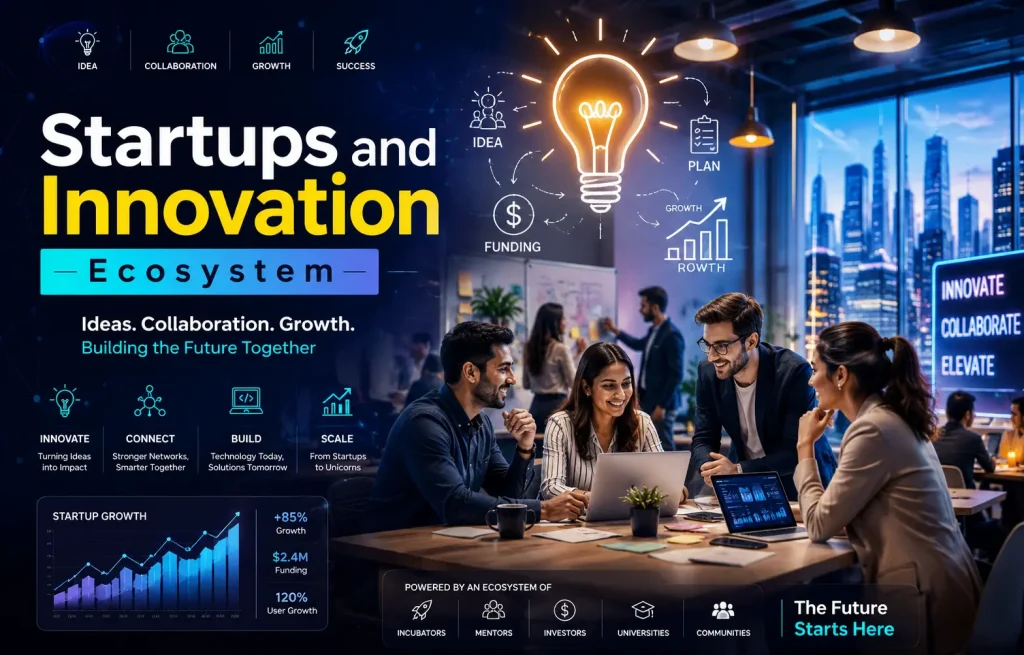
The ecosystem at NCL Innovation Park is diverse and dynamic. It supports startups working in multiple high-impact domains, especially those requiring scientific and technical expertise.
Some common focus areas include:
- Clean energy and renewable technologies
- Environmental sustainability solutions
- Advanced materials and nanotechnology
- Biotechnology and healthcare innovations
- Chemical and industrial process improvements
- Smart manufacturing and engineering solutions
Startups here often work on solving real-world problems such as pollution control, energy efficiency, healthcare accessibility, and industrial optimization.
What makes the ecosystem unique is its strong connection with research institutions. This allows startups to access cutting-edge scientific knowledge that is often not available in traditional incubators.
Collaboration is another major feature. Startups frequently interact with other innovators, researchers, and industry experts, which helps in refining ideas and improving business models.
Incubation Process
The incubation process at NCL Innovation Park is structured to guide startups from idea stage to market readiness.
Idea selection
Entrepreneurs or researchers submit their ideas, which are evaluated based on innovation potential, technical feasibility, and market relevance.
Mentorship assignment
Selected startups are assigned mentors who provide technical, business, and strategic guidance.
Development phase
Startups work on building prototypes, conducting experiments, and refining their solutions with access to labs and facilities.
Business model development
Alongside technical work, teams focus on building sustainable business models, understanding customer needs, and identifying market opportunities.
Funding and networking support
The park helps startups connect with investors, funding agencies, and industry partners who can support scaling efforts.
Market launch and scaling
Once the product is ready, startups receive support in commercialization and scaling strategies.
This structured approach increases the chances of success for early-stage ventures, especially in complex technical fields.
Impact on Innovation and Economy
NCL Innovation Park has a significant impact on both the innovation ecosystem and the broader economy.
It contributes in several ways:
Promoting research commercialization
Many scientific discoveries often remain in labs. The park helps convert them into usable products and services.
Job creation
Startups incubated here generate employment opportunities in high-skill sectors such as engineering, biotechnology, and IT.
Strengthening deep-tech ecosystem
By supporting science-driven startups, it builds a strong foundation for long-term technological advancement.
Industry collaboration
It creates partnerships between startups and established companies, leading to better product development and market reach.
Encouraging entrepreneurship
It inspires students and researchers to consider entrepreneurship as a career path, not just traditional jobs.
Supporting sustainable development
Many startups focus on environmental and social challenges, contributing to sustainable growth.
Overall, the innovation park plays a key role in transforming knowledge into economic value.
Why It Matters for Entrepreneurs
For entrepreneurs, especially those working in technical fields, NCL Innovation Park offers several advantages.
First, it provides access to high-end research infrastructure that is usually expensive and difficult to obtain. This reduces the initial barriers to innovation.
Second, the mentorship network helps entrepreneurs avoid common mistakes and build stronger business strategies. Guidance from experienced scientists and industry experts adds significant value.
Third, the collaborative environment allows startups to learn from each other and explore partnerships that can accelerate growth.
Fourth, the focus on deep-tech innovation ensures that startups are solving meaningful and complex problems, which often leads to long-term success and scalability.
Finally, the connection to funding networks improves the chances of securing investment, which is crucial for early-stage growth.
Challenges and Future Outlook
Despite its strengths, innovation ecosystems like this also face challenges.
One of the main challenges is the long development cycle of deep-tech startups. Scientific innovations often take years to become commercially viable, requiring patience and continuous support.
Another challenge is funding availability, especially for early-stage research-based ideas that may not show immediate returns.
Market adoption can also be difficult, as advanced technologies often require time to gain user trust and industry acceptance.
Looking toward the future, the role of NCL Innovation Park is expected to grow even further. With increasing focus on sustainability, clean energy, and advanced technology, such innovation hubs will become more important than ever.
Expanding global collaborations, improving funding access, and integrating digital technologies will likely shape its next phase of development.
Conclusion
NCL Innovation Park represents a powerful model of how research, innovation, and entrepreneurship can come together to create real-world impact. By providing infrastructure, mentorship, and a collaborative environment, it helps transform scientific ideas into successful startups.
Its role goes beyond just supporting businesses. It contributes to economic growth, job creation, and technological advancement while also addressing important societal challenges.
As innovation continues to shape the future, platforms like this will remain essential in bridging the gap between research and industry, helping ideas move from laboratories into everyday life.