
Introduction
Innovation has become a defining force in shaping education and industry in the modern world. Institutions are no longer limited to teaching theory; they are expected to create environments where ideas turn into practical solutions. One such emerging hub is the Kalyani Center for Technological Innovation, a facility dedicated to research, creativity, and applied technological development.
This center plays an important role in connecting academic learning with real-world challenges. It brings together students, researchers, and industry experts to work on ideas that can be developed into impactful technologies. Instead of traditional learning methods, the focus here is on experimentation, collaboration, and innovation.
In this article, we take a detailed look inside this innovation ecosystem—how it works, what it offers, and why it matters in today’s rapidly changing technological landscape.
Vision and Core Mission
The core mission of the Kalyani Center for Technological Innovation is to build a culture of creativity and problem-solving. It encourages individuals to think beyond textbooks and focus on solutions that can make a real difference in society.
The vision is built on three strong pillars:
First, fostering innovation through hands-on experience. Second, bridging the gap between academic knowledge and industrial application. Third, preparing individuals to become future-ready professionals and entrepreneurs.
Rather than focusing only on theoretical excellence, the center prioritizes practical implementation. Every idea is encouraged to go through stages of research, testing, and refinement.
Academic Integration and Learning Model
One of the most distinctive features of this center is its integration with academic learning. It does not function separately from education but enhances it through practical exposure.
Students are encouraged to participate in project-based learning where they apply concepts from their studies to real-world problems. This approach makes learning more engaging and meaningful.
Instead of memorizing information, students learn by doing. For example, engineering learners might design automated systems, while computer science students might build software applications powered by data analytics or artificial intelligence.
This learning model improves critical thinking, teamwork, and technical confidence. It prepares students not just for exams but for real professional environments.
Research Environment and Innovation Culture
The research environment at the center is designed to support curiosity and experimentation. It encourages individuals to question existing systems and develop better alternatives.
Researchers and students collaborate on projects that cover a wide range of fields such as artificial intelligence, robotics, renewable energy, smart systems, and digital transformation technologies.
The culture of innovation is supported by open discussions, brainstorming sessions, and interdisciplinary teamwork. Engineers, designers, and data scientists often work together, combining their expertise to create more effective solutions.
This environment helps transform raw ideas into structured innovations that can be tested and improved over time.
Advanced Laboratories and Facilities
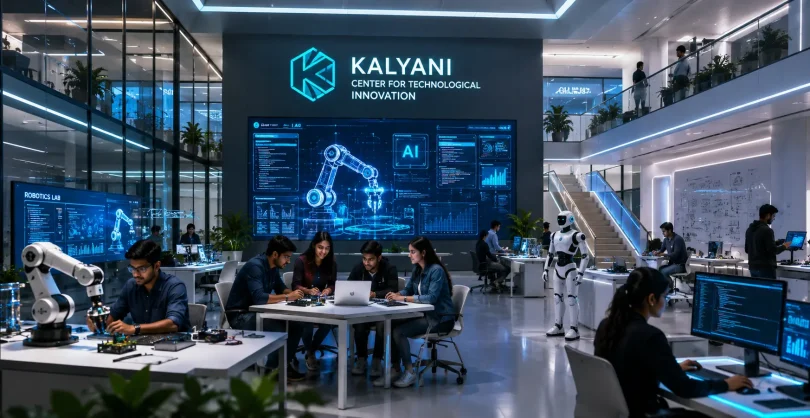
A major strength of the center lies in its infrastructure. The laboratories are equipped with modern tools and technologies that support advanced research and development.
These include computing labs for artificial intelligence and machine learning experiments, electronics workshops for hardware development, 3D printing facilities for prototyping, and simulation systems for testing complex models.
Such facilities allow ideas to move quickly from concept to prototype. This reduces development time and increases the chances of real-world application.
The availability of these resources ensures that innovation is not limited by lack of tools or technology.
Industry Collaboration and Partnerships

The center maintains strong relationships with industry partners. These collaborations ensure that research remains relevant and aligned with current market needs.
Industry professionals often contribute through mentorship programs, guest lectures, and joint research initiatives. They also help in identifying real-world problems that need innovative solutions.
Students benefit from internships and exposure to professional environments, while companies gain access to fresh ideas and emerging talent.
This partnership between academia and industry creates a mutually beneficial ecosystem where knowledge and application go hand in hand.
Entrepreneurship and Startup Support
Beyond research and education, the center also plays a vital role in promoting entrepreneurship. It encourages individuals to transform their ideas into viable business ventures.
Through incubation programs, aspiring entrepreneurs receive mentorship, technical support, and guidance on business development. They are also introduced to funding opportunities and networking platforms.
This support system helps early-stage startups grow and develop into sustainable businesses. It also promotes a mindset of independence and innovation among students and researchers.
By supporting startups, the center contributes not only to technological advancement but also to economic development and job creation.
Focus on Real-World Challenges
A key principle of the center is addressing real-world problems through innovation. Projects are often designed around issues that affect society directly.
These include environmental sustainability, healthcare improvements, agricultural efficiency, urban development, and digital security.
By focusing on practical challenges, the center ensures that its research has meaningful impact. Students and researchers gain a deeper understanding of how technology can be used to solve everyday problems.
This approach also increases the relevance of academic work in modern society.
Skill Development Programs
The center places strong emphasis on skill development. It organizes training programs that help participants improve both technical and soft skills.
Technical training includes programming, data science, artificial intelligence, and system design. Soft skills training focuses on communication, leadership, teamwork, and project management.
These programs ensure that participants are well-prepared for professional careers. They also help individuals stay updated with evolving technologies and industry trends.
Skill development is seen as a continuous process rather than a one-time activity.
Digital Transformation and Innovation Trends
In today’s world, digital transformation is shaping every industry. The center actively engages in research related to emerging technologies such as cloud computing, machine learning, Internet of Things, and automation systems.
By exploring these areas, the center helps industries adopt smarter and more efficient processes. It also prepares students to work in technology-driven environments.
The focus on digital innovation ensures that the center remains relevant in a rapidly changing technological landscape.
Case-Based Learning and Practical Exposure
Instead of relying solely on lectures, the center uses case-based learning methods. Students are given real or simulated scenarios that require analysis and problem-solving.
This method helps in developing analytical thinking and decision-making skills. It also improves the ability to apply theoretical knowledge in practical situations.
Practical exposure is further enhanced through workshops, live projects, and collaborative assignments.
These experiences prepare learners for real challenges in their future careers.
Impact on Students and Researchers
The impact of the center on its participants is significant. Students gain confidence, technical expertise, and a better understanding of innovation processes.
Researchers benefit from access to advanced tools, collaborative opportunities, and exposure to industry challenges.
Many participants go on to work in leading technology companies or establish their own startups. The center acts as a foundation for their professional growth and success.
It helps individuals transition from learners to creators and innovators.
Contribution to Technological Growth
The contributions of the center extend beyond education. Its research outputs influence multiple industries by introducing efficient systems, improved processes, and innovative technologies.
These contributions support advancements in areas such as smart infrastructure, renewable energy systems, automation, and data-driven decision-making.
By focusing on innovation with practical value, the center plays a role in shaping the future of technology.
Challenges and Continuous Improvement
Like any innovation-focused institution, the center faces challenges such as keeping up with rapid technological changes, maintaining funding for research, and expanding industry partnerships.
However, these challenges also encourage continuous improvement. The center adapts by updating its programs, introducing new research areas, and strengthening collaborations.
This adaptability ensures long-term relevance and growth.
Future Prospects
The future of the Kalyani Center for Technological Innovation looks promising. With increasing demand for advanced technology solutions, the center is expected to expand its research domains and global collaborations.
Future developments may include stronger focus on artificial intelligence, sustainable technologies, global research partnerships, and expanded startup incubation programs.
As technology continues to evolve, the center is likely to remain an important contributor to innovation and knowledge creation.
Conclusion
The Kalyani Center for Technological Innovation represents a modern approach to education and technological development. It combines learning, research, and entrepreneurship into one integrated ecosystem.
By focusing on real-world problem solving, hands-on learning, and industry collaboration, it prepares individuals for the future of work and innovation.
In a rapidly changing world, such centers are essential for driving progress and shaping new possibilities. The Kalyani Center for Technological Innovation stands as an example of how education and innovation can come together to create meaningful impact on society and technology.